

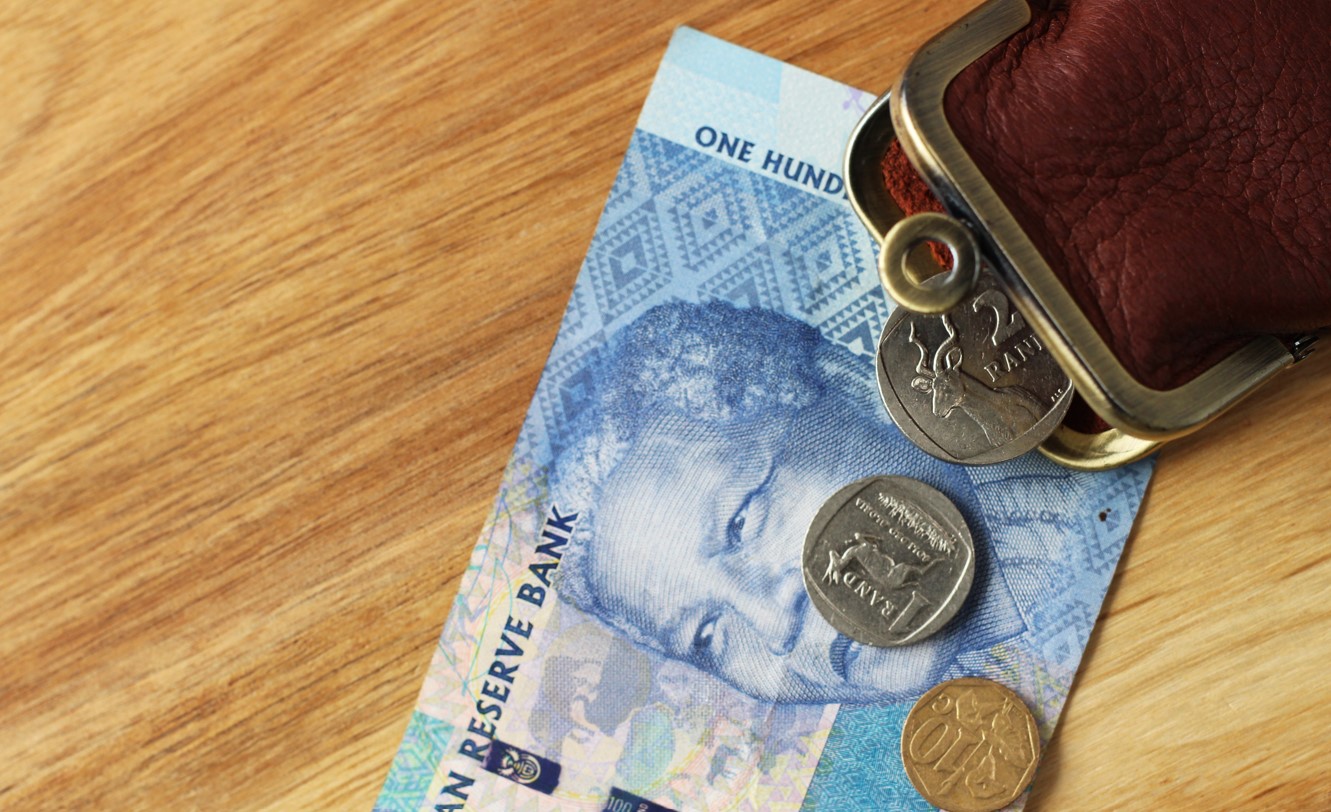
December plans are easy to picture: travelling home, sharing meals and finding a gift that makes someone’s day. January’s expenses are less exciting, but just as real. Rent, groceries, school supplies, transport and debt repayments still need a place in the same household budget. The question is not whether you deserve to enjoy December. It is how to enjoy it without spending money that already has a job in January.
Start with January, then decide what December can afford. This guide takes you through that order: count the costs waiting in the new year, set a realistic festive limit, test Black Friday offers and understand what new borrowing would mean for your repayments. Planning cannot solve an income shortfall on its own, but it can make that shortfall visible early enough to explore your options.
Why January needs a plan before December starts
Official statistics describe national conditions, not your household, but they show why the margin for error is thin.
Official statistics. Statistics South Africa reported that annual consumer price inflation was 4.5% in September 2026, up from 4.4% in August and 4.3% in July. Costs are not moving together. In the same release, food and non-alcoholic beverage inflation was 1.2%, while fuel prices were 27.9% higher than a year earlier and passenger transport inflation was 12.3%. For households that travel to work or school every day, January transport may cost noticeably more than a year ago, even where grocery prices are rising slowly.
The Reserve Bank's Monetary Policy Committee raised the repo rate by 25 basis points to 7.25%, effective 25 September 2026 (reported by SAnews on 23 September), and said headline inflation will likely be above 5% later this year and early next year. If you hold credit with a variable interest rate, your repayment may rise. Your credit agreement will show whether yours does.
The Reserve Bank's September 2026 Quarterly Bulletin, published on 29 September 2026, puts household debt at 61.3% of nominal disposable income in the second quarter of 2026. Economist John Loos, writing in Property Professional on 5 October 2026, noted that this is the lowest ratio since 2019, but also that the net household saving rate was negative 1.6% of disposable income. In aggregate, that means households were drawing down savings or borrowing rather than adding to savings. He expects pressure on household finances to build in the second half of 2026. That is his forecast, not a reported outcome.
None of this predicts what will happen to your finances. It does support a cautious reading: with transport costs rising sharply and interest rates higher, a household that commits its spare cash to festive spending in November has less to absorb a difficult January.
How Black Friday and festive marketing work on your decisions
Black Friday falls on Friday, 27 November 2026, and promotions often begin earlier. Time-limited offers are designed to prompt a decision now. That is not a criticism of retailers, but it does mean the pressure to buy comes from the offer's timing rather than from your needs.
Research findings. Two studies help, with a caveat: neither examined Black Friday itself, and both are international. Klaus Wertenbroch's 1998 paper in Marketing Science found that consumers deliberately limit how much they buy of products they are tempted to overuse, even giving up the per-unit saving of larger packs because smaller purchases make excess consumption harder. The useful point for shoppers is that a bigger discount can be a reason to buy more than you intended. A study by Inman, Stilley and Wakefield in the Journal of Consumer Research, summarised by the University of Pittsburgh, found that more than 75 per cent of participants set aside a cushion for unplanned purchases and that shoppers were generally accurate in their budgets. Highly impulsive shoppers who browsed most aisles, however, overspent, and the authors suggested that such shoppers plan as many specific purchases in advance as possible.
Consumer protection. The National Consumer Commission (NCC) has reminded suppliers not to market in a misleading or deceptive way during Black Friday promotions, for example in a notice dated 25 November 2022, and published a festive-season alert on fraud and scams on 1 December 2023. These are not statements about this year's promotions, but they show that misleading advertising and scams are recurring concerns at this time of year.
Telling a genuine saving from a purchase you would not have made
A saving exists only when three things are true: you already intended to buy the item, it fits within your budget and the price is lower than you would otherwise have paid. If any one fails, the discount changes the size of the spend, not the fact of it. Take an item priced at R1,000 with R400 off. If you were going to buy it anyway, you have saved R400. If you were not, you have spent R600 that was not in your plan.
Practical recommendations:
- Write your shopping list before the sales begin and buy against it.
- Note the usual price of each planned item now, and compare at least two other retailers on the day. A crossed-out "was" price shows only what the retailer chose to display.
- Read the terms: exclusions, stock limits, delivery fees, how long the offer runs and the returns policy. An "up to" discount sets a maximum that may apply to only some items.
- For a non-essential item that is not on your list, try a 48-hour pause. This is a practical decision rule, not a guarantee against overspending. After the pause, check the need, the full price and the budget again. An offer ending does not make an unaffordable purchase affordable.
Build a festive budget around the money you actually have
Build your plan around pay dates, not just calendar months. Write down your take-home income for November, December and January, and when each payment will arrive. Count a bonus only once it is confirmed. Next, record your regular commitments and the extra January costs you expect. Check which bills fall due before your next income arrives: money expected later cannot pay a bill due earlier. Set aside what is needed for that gap before deciding on gifts, travel, outings or other festive extras.
Illustrative example. The figures below are invented to show the method. They are not South African household data and will not match your circumstances. Assume a household with take-home pay of R22,000 a month and no bonus.
| Item | Amount (rand) |
|---|---|
| Monthly take-home pay | R22,000 |
| Housing (rent or bond) | R7,000 |
| Groceries | R4,500 |
| Transport | R2,800 |
| Utilities, airtime and data | R1,800 |
| Debt repayments | R2,200 |
| Insurance and funeral cover | R900 |
| Regular monthly commitments | R19,200 |
| Monthly surplus (22,000 minus 19,200) | R2,800 |
| January school costs: uniforms, stationery and books for two learners | R6,500 |
| January cash needed (19,200 plus 6,500) | R25,700 |
| January gap against income (25,700 minus 22,000) | R3,700 |
The November and December surpluses together come to R5,600.
-
In Plan A, the household sets aside the R3,700 January gap first, which leaves R1,900 for festive spending on top of regular groceries.
-
In Plan B, it spends R4,000 on festive items without setting anything aside. Only R1,600 of the surplus remains (5,600 minus 4,000), so January is R2,100 short (3,700 minus 1,600), a gap that would have to be met by borrowing or by cutting essentials. The income is identical. Only the order of decisions differs.
Assumptions: no bonus, no interest or fees, the same commitments every month, both months' surpluses available and no unexpected costs. A real household would also need a small buffer for emergencies, which this example leaves out.
Counting the January costs properly
Turn “back to school” into an itemised list, not one hopeful estimate. Ask your school for its fee schedule and supply lists, then price uniforms, stationery, books and transport separately. Check what can still be used before buying replacements, and ask whether a second-hand uniform exchange is available. Add groceries and your usual household commitments without counting them twice. Costs vary by school and area, so use your own lists rather than a national average. Buy early only when the item is needed, the price is genuinely lower and the money is already available.
Existing debt and the risks of borrowing for non-essentials
Before adding any credit, take stock of what you owe: for every account, the balance, the monthly repayment, the interest rate and whether the rate is variable. Borrowing for gifts or Black Friday purchases does not remove the cost. It moves the cost into the new year, and interest and fees can add to it. Before you sign, ask for the total cost in rand, including interest and fees, and test the repayment against your January budget, not only this month's.
Government guidance on debt counselling, published by Vuk'uzenzele in June 2013, lists warning signs of over-indebtedness: borrowing to pay other debts, using credit to buy necessities and receiving demand letters or court judgments. It explains that a debt counsellor registered with the National Credit Regulator can help negotiate lower payments with credit providers, and that consumers can verify a counsellor's registration with the National Credit Regulator. The guidance is more than a decade old, so check current requirements with the NCR before relying on the details.
Setting priorities whenmoneyis tight
When not everything fits, a simple order helps. Put food, housing, utilities and transport to work and school first. Then comes debt repayment, because missed payments can carry consequences. Then build a small cushion for emergencies, even if it is only a few hundred rand. Festive spending comes last. This is a practical recommendation, not a rule, and your circumstances, such as a medical need, may require a different order.
What to do when income cannot cover expected expenses
Budgeting helps with timing and choices. It cannot create income that is not there, and rising transport costs and higher interest rates are outside any single household's control. If the numbers do not work, that is information, not a personal failing. Options include:
- Reduce the festive plan to what the budget can carry, and agree gift limits or shared meals with family early.
- Contact creditors before you miss a payment and ask about your options, preferably in writing.
- If you are borrowing to pay other debts, speak to a registered debt counsellor and verify the registration with the NCR.
- If you believe a supplier has misled you, you can lodge a complaint with the NCC.
- Be wary of urgent offers or links that arrive by message. The NCC has previously warned about scams around festive-season sales.
A checklist before you buy
- Know your take-home income for November, December and January.
- List your certain January costs with a rand amount for each.
- Set aside the January gap before you set a festive ceiling.
- List every debt with its balance, repayment and rate type.
- Write a shopping list and set a small, fixed amount for unplanned items.
- Compare the price at two other retailers and note the usual price.
- Read the terms: exclusions, stock limits, delivery fees and returns.
- Wait 48 hours on anything that is not on the list.
- Confirm you can pay without touching January money or taking on new credit.
Conclusion
You do not need a perfect festive budget. You need an honest one: money you can rely on, bills with dates attached and a spending limit that leaves room for January. Before your next purchase, take one action—write down what must be paid before your first income of the new year arrives. Protect that money first. December can still be meaningful without leaving January to carry the bill.
Through November, Siyakha Consulting is publishing one practical money step each week, covering Black Friday decisions, debt and school costs. Follow us on Facebook and X (formally twitter) to see each one.
